This is something every rower will find themselves confronting at some point in their career, and given it took me about two years to work out what works well and what really doesn’t, I thought I’d outline my personal method here. I’ve never had a covering applied in this way fall off while rowing (or even have it budge).
You will need:
- Plasters (if the blister is actively weeping)
- Zinc oxide tape (a couple quid from Boots)
- Electrical tape (a couple quid from a hardware store)
The method
Step 1: apply a plaster if the wound is weeping or raw
This is important as the rest of the materials we’ll be applying aren’t sterilised, and so you don’t really want to be putting them directly over open wounds. Apply the plaster reasonably loose — we’ll be adding other tapes to keep it stuck on.
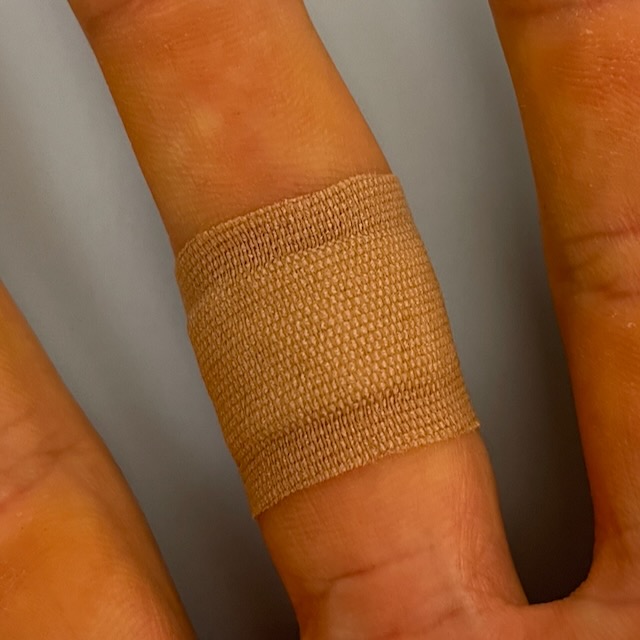
Step 2: wrap it in zinc oxide tape
The zinc oxide tape provides a nice cushioned layer over the wound, and acts to keep everything stuck together. If you’ve used a good-quality fabric plaster (like I’ve used here), this step is only necessary if you want extra cushioning over the wound.
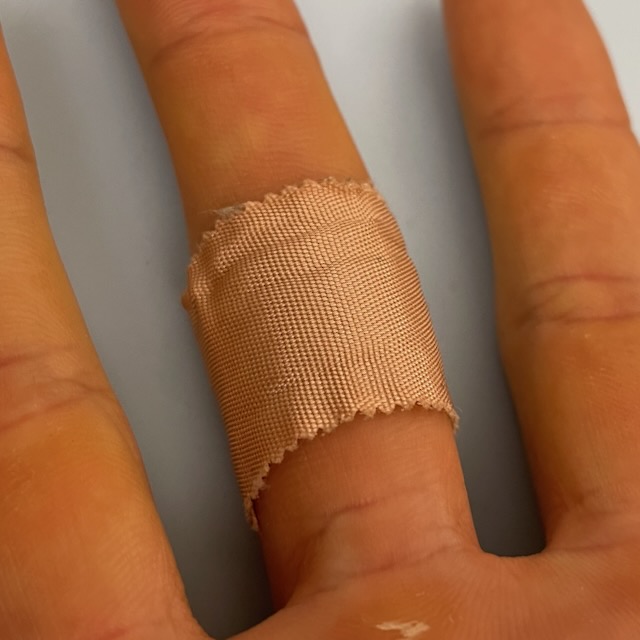
Step 3: wrap it in electrical tape
This is the slightly more unusual, but crucial step. This is what ensures the covering won’t budge. Seriously. I’ve done a full tideway championship course race (almost 7km) with this covering, and it didn’t budge at all.
Using electrical tape, wrap around the covering as tightly as possible without cutting off circulation (this won’t be very tight in practice). Make sure you get a good overlap, as electrical tape sticks very will to itself but not brilliantly to anything else.
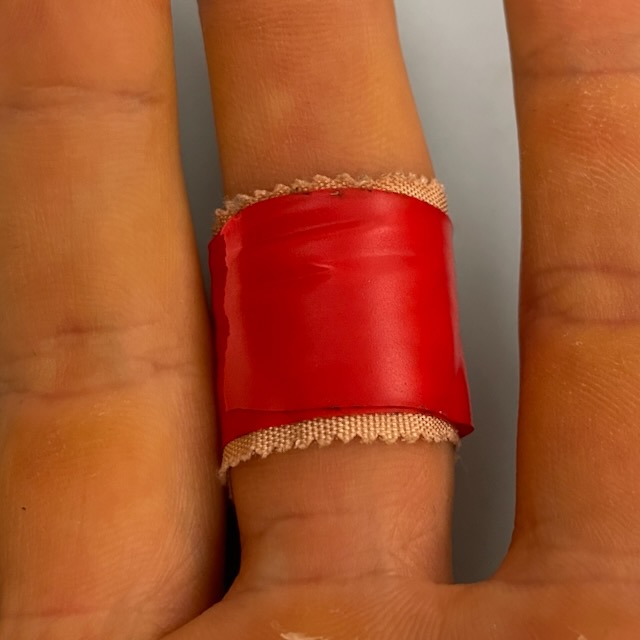
Step 4: take it off!
If you want your blisters to heal, you need to take your coverings off between outings. This gives them time to breathe and avoids they drying out, which will not help them heal and callous over.
Dealing with blisters on your palms
I’m going to be honest, these are a real pain to deal with. Your best bet is to apply the above method as best you can, making sure that any tape you apply forms a full circle (both zinc oxide and electrical tape stick best to themselves). Just make sure to take care of them outside of training, and keep them covered and cushioned until they’re fully healed and calloused over.